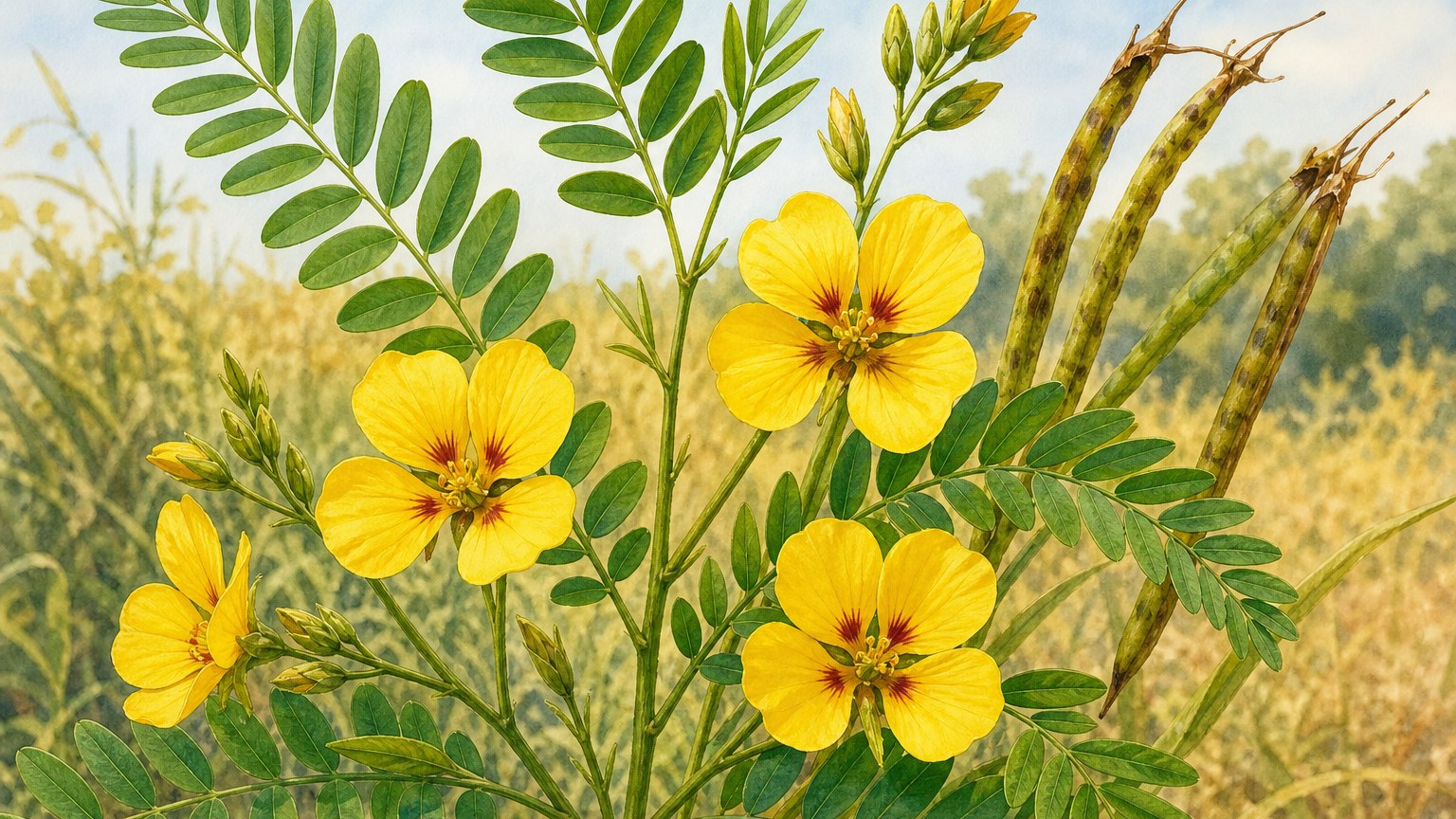
Plant guide
Chamaecrista fasciculata
A Virginia-native annual legume that self-seeds into cheerful yellow-flowering colonies, feeds pollinators, fixes nitrogen, and works as a sacrificial deer-browse strip along sunny woodland edges.
Open small pockets in leaf litter or turf so seed contacts soil. Partridge pea is ideal for the rough transition between lawn, ditch, meadow, and woodline where richer vegetable-bed amendments are unnecessary.
Water weekly only during establishment or drought. Once rooted, the patch is drought tolerant and can survive the dry, bright edge conditions common around Virginia woodlines.
Skip nitrogen fertilizer. If the site is extremely depleted, add a light compost dusting or inoculated native-legume seed blend rather than pushing lush growth.
No training required. Let plants flower and form pods for reseeding, then selectively mow or hand-pull around paths and bed edges.
For reseeding, collect dry brown pods before they pop open, store cool and dry, and scatter in fall. Otherwise leave pods for wildlife and natural spread.
Goldenrod is listed as a useful companion for Partridge Pea; use it to build a more resilient mixed planting instead of treating this as a single-crop bed.
Kale is listed as a useful companion for Partridge Pea; use it to build a more resilient mixed planting instead of treating this as a single-crop bed.
Radishes is listed as a useful companion for Partridge Pea; use it to build a more resilient mixed planting instead of treating this as a single-crop bed.
Virginia Creeper is listed as a useful companion for Partridge Pea; use it to build a more resilient mixed planting instead of treating this as a single-crop bed.
White Clover is listed as a useful companion for Partridge Pea; use it to build a more resilient mixed planting instead of treating this as a single-crop bed.
Use these as decision points for a mixed bed: choose companions that solve a real job for this planting, such as support, pollinator draw, soil cover, pest confusion, or harvest timing.
Watch out for these common pests and diseases. Early detection and prevention are key to maintaining healthy plants.
Treat Partridge Pea as one role in a working plant team. These guild pages show the full recipe, timing, nearby plants, and failure points around this crop.
| Issue | How to fix it |
|---|---|
| Patch fails to return | Expose more bare soil before sowing and let pods fully mature before mowing. |
| Seedlings disappear | Use a wider strip and combine with faster brassicas or clover so deer pressure is spread across more forage. |
| Too much spread into beds | Deadhead the inner edge, mow paths before pods mature, and keep the main colony outside the production garden. |
Best choice for wildlife value and regional adaptation when available from native seed suppliers.
Common in native meadow mixes and useful for sunny sacrificial strips.
Plant details were checked against regional/native plant references before publication.
Use it as one layer in a darker, softer, lower-spray yard that supports fireflies and the insects they depend on.
