Plant guide
Cucurbita spp.
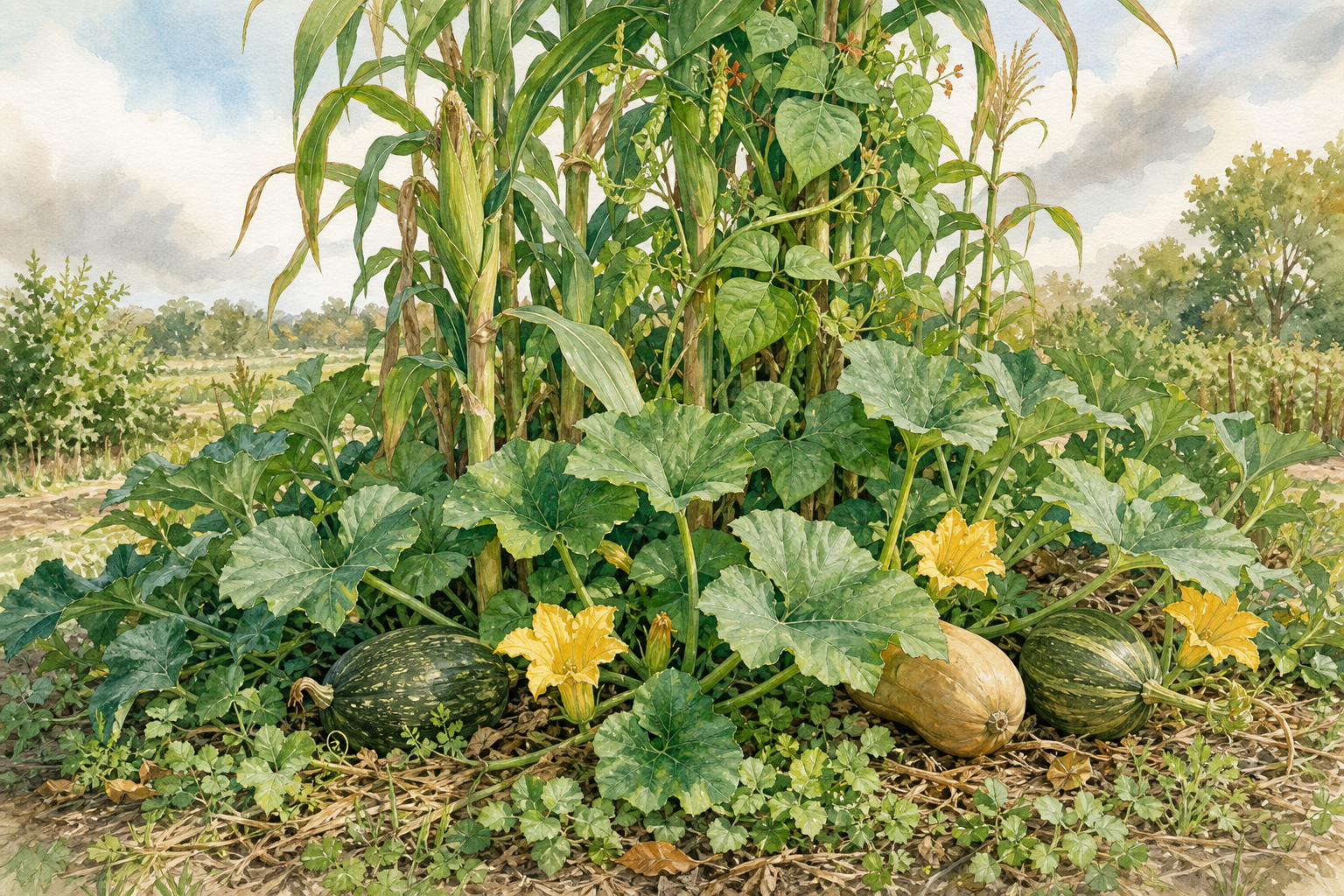
Winter squash forms the living mulch of the Three Sisters guild, spreading broad leaves over the mound to shade soil, slow weeds, and protect moisture while producing long-storing fruit.
Photo: BuildLeanSaaS / Smart Lawn Guide generated field illustration
Winter squash wants the richest edge of the Three Sisters mound. Mix compost into the planting pocket, keep soil loose enough for quick rooting, and avoid low wet spots that invite rot.
Water deeply once or twice weekly, especially during flowering and fruit expansion. Squash leaves shade the mound, but large vines still need steady moisture in hot weather.
Start with compost and a balanced organic fertilizer at planting. Once vines run and fruit sets, avoid pushing too much leafy growth at the expense of ripening fruit.
Guide vines outward from the corn and bean center so they act as a living mulch instead of smothering young stalks. Prune only damaged or diseased leaves when airflow is poor.
Harvest when rinds are hard, color is mature, and stems begin to cork. Cut with a short stem attached, cure in a warm airy spot, then store in a cool dry room.
Corn is listed as a useful companion for Winter Squash; use it to build a more resilient mixed planting instead of treating this as a single-crop bed.
Pole Beans is listed as a useful companion for Winter Squash; use it to build a more resilient mixed planting instead of treating this as a single-crop bed.
Use these as decision points for a mixed bed: choose companions that solve a real job for this planting, such as support, pollinator draw, soil cover, pest confusion, or harvest timing.
Watch out for these common pests and diseases. Early detection and prevention are key to maintaining healthy plants.
Treat Winter Squash as one role in a working plant team. These guild pages show the full recipe, timing, nearby plants, and failure points around this crop.
| Issue | How to fix it |
|---|---|
| Fruit starts then shrivels | Improve pollination by planting flowers nearby, hand-pollinating early female blooms, and avoiding insecticides during bloom. |
| White powder spreads across leaves | Improve airflow, water at soil level, and remove the worst leaves late in the season once fruit is sizing. |
| Vines overrun the guild | Plant fewer squash per mound and train vines outward before stems stiffen. |
Reliable butternut type with good storage and relative vine borer tolerance.
Smaller winter squash with edible skin and shorter vines for tighter gardens.
Vigorous heat-tolerant storage squash for long-season humid gardens.
Plant details were checked against regional/native plant references before publication.
Use it as one layer in a darker, softer, lower-spray yard that supports fireflies and the insects they depend on.
