Back to Plants
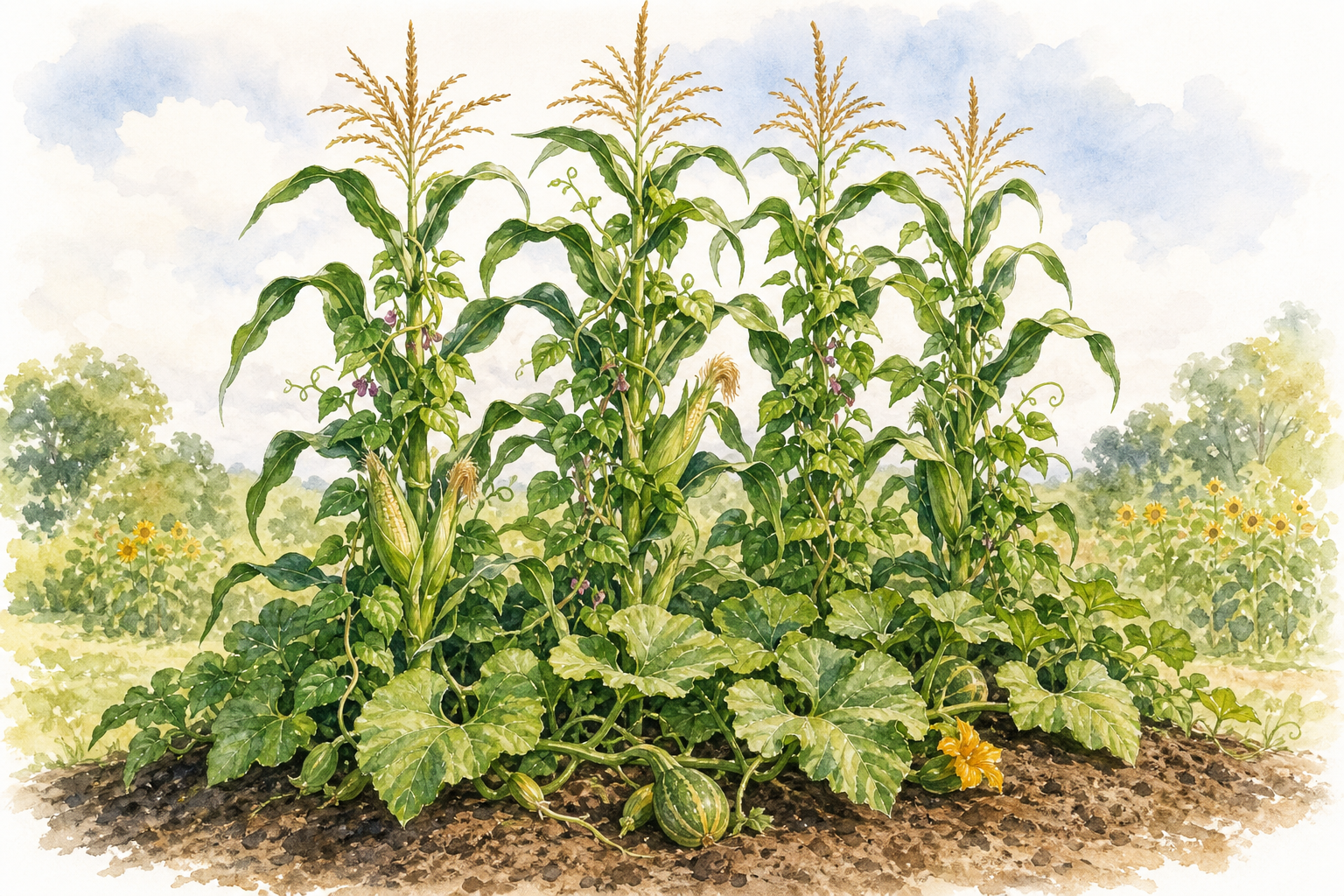
Watercolor field illustration of corn growing with pole beans and winter squash in a Three Sisters garden

Plant guide

Corn

Zea mays

beginner level

Corn is the upright anchor of the Three Sisters guild: it turns summer sun into a living trellis for pole beans while creating a harvestable grain or sweet-corn crop for the garden.

Photo: BuildLeanSaaS / Smart Lawn Guide generated field illustration

Central Virginia notes

  • Three Sisters role: corn is the living trellis for pole beans and the vertical layer above winter squash.
  • In Central Virginia, wait for warm late-spring soil; cold wet clay can rot seed before the guild starts.
  • Use larger blocks or multiple mounds when possible because corn pollination is weaker in single tiny hills.

Quick Growing Facts

Sun Requirements
full sun
Water Needs
moderate
Growth Habit
70-100 days
Hardiness Zones
3-10
Mature Size
5-9 feet tall
Soil Type
Rich, well-draining soil with steady moisture

Soil & Bed Preparation

Corn is the heavy feeder in a Three Sisters mound. Blend finished compost into the top 8 to 10 inches, shape a broad mound for drainage, and avoid planting into cold compacted clay. In Central Virginia, warm soil matters more than rushing the calendar.

Watering & Feeding

Give corn about 1 inch of water per week, increasing during tasseling and ear fill. Water the mound deeply at the soil line so beans and squash benefit without wetting foliage every day.

Add compost at planting and side-dress when corn is knee-high. Beans will add some nitrogen later, but young corn needs fertility before the bean partnership is fully active.

Training & Maintenance

Do not prune corn. The main training job is timing: let stalks become strong enough to support vines before pole beans are planted around them.

Harvest & Storage

Harvest sweet corn when silks brown and kernels release milky juice when pressed. For dry corn, leave ears on the stalk until husks dry, then finish curing under cover before shelling.

Planting Instructions

  • Plant after soil reaches 60 F and frost risk has passed.
  • Sow in blocks or mounds instead of one long row for better pollination.
  • For Three Sisters mounds, plant corn first and wait until stalks are 6 inches tall before adding beans.
  • Space mounds about 4 feet apart so squash vines have room to sprawl.

Care Instructions

  • Water deeply during tasseling and ear fill.
  • Side-dress with compost when plants are knee-high.
  • Keep young corn weed-free until squash leaves begin shading the soil.
  • Plant several mounds or a small block so wind can move pollen between stalks.

Seasonal Growing Calendar

Late spring

  • Wait for warm soil and stable nights before sowing.
  • Plant corn in mounds or short blocks for pollination.
  • Mark each mound so beans and squash can be added on schedule.

Early summer

  • Add pole beans once corn reaches about 6 inches tall.
  • Plant winter squash at the mound edge.
  • Side-dress with compost before rapid growth begins.

Mid summer

  • Water consistently through tasseling.
  • Check that beans are climbing without pulling down young stalks.
  • Hand-pollinate small stands if ear fill looks spotty.

Late summer

  • Harvest sweet corn promptly or let dry corn mature fully.
  • Leave stalks standing while beans finish if they still need support.
  • Chop spent stalks for compost after the guild is done.

Best companion plants for Corn

Pole Beans

Pole Beans is listed as a useful companion for Corn; use it to build a more resilient mixed planting instead of treating this as a single-crop bed.

Open guide

Winter Squash

Winter Squash is listed as a useful companion for Corn; use it to build a more resilient mixed planting instead of treating this as a single-crop bed.

Open guide

Use these as decision points for a mixed bed: choose companions that solve a real job for this planting, such as support, pollinator draw, soil cover, pest confusion, or harvest timing.

Common Pests & Issues

Corn earworm
Raccoons
Cutworms
Drought stress during pollination

Watch out for these common pests and diseases. Early detection and prevention are key to maintaining healthy plants.

Troubleshooting Guide

IssueHow to fix it
Ears have missing kernelsPlant more corn in a block, shake tassels during pollen shed, and avoid tiny isolated stands.
Beans pull corn downPlant beans later next time and choose sturdy corn varieties rather than short sweet-corn types for the guild.
Corn stalls in pale green growthSide-dress with compost or a balanced organic fertilizer and keep soil moisture steady.

Recommended Varieties

Silver Queen

Classic sweet corn for fresh eating where the guild is harvest-focused.

92 days

Painted Mountain

Short-season flour corn useful where dry corn and resilience matter more than sweet eating.

70-90 days

Sturdy dent or flour corn

Best for traditional Three Sisters plantings because stronger stalks handle climbing beans.

Succession Ideas

  • Plant one Three Sisters block at a time rather than scattering isolated corn hills.
  • If you want fresh sweet corn all summer, make a separate corn block every 10 to 14 days.
  • For guild reliability, prioritize stalk strength and pollination over squeezing in too many varieties.

Best uses in the yard

Fresh sweet corn
Dry cornmeal
Roasting ears
Soup and stew base

Habitat value

Energy-rich grain
Provides fiber
Pairs with beans for a more complete protein pattern

Sources and further reading

Plant details were checked against regional/native plant references before publication.

Ready to place Corn in the right spot?

Use it as one layer in a darker, softer, lower-spray yard that supports fireflies and the insects they depend on.