Back to Plants
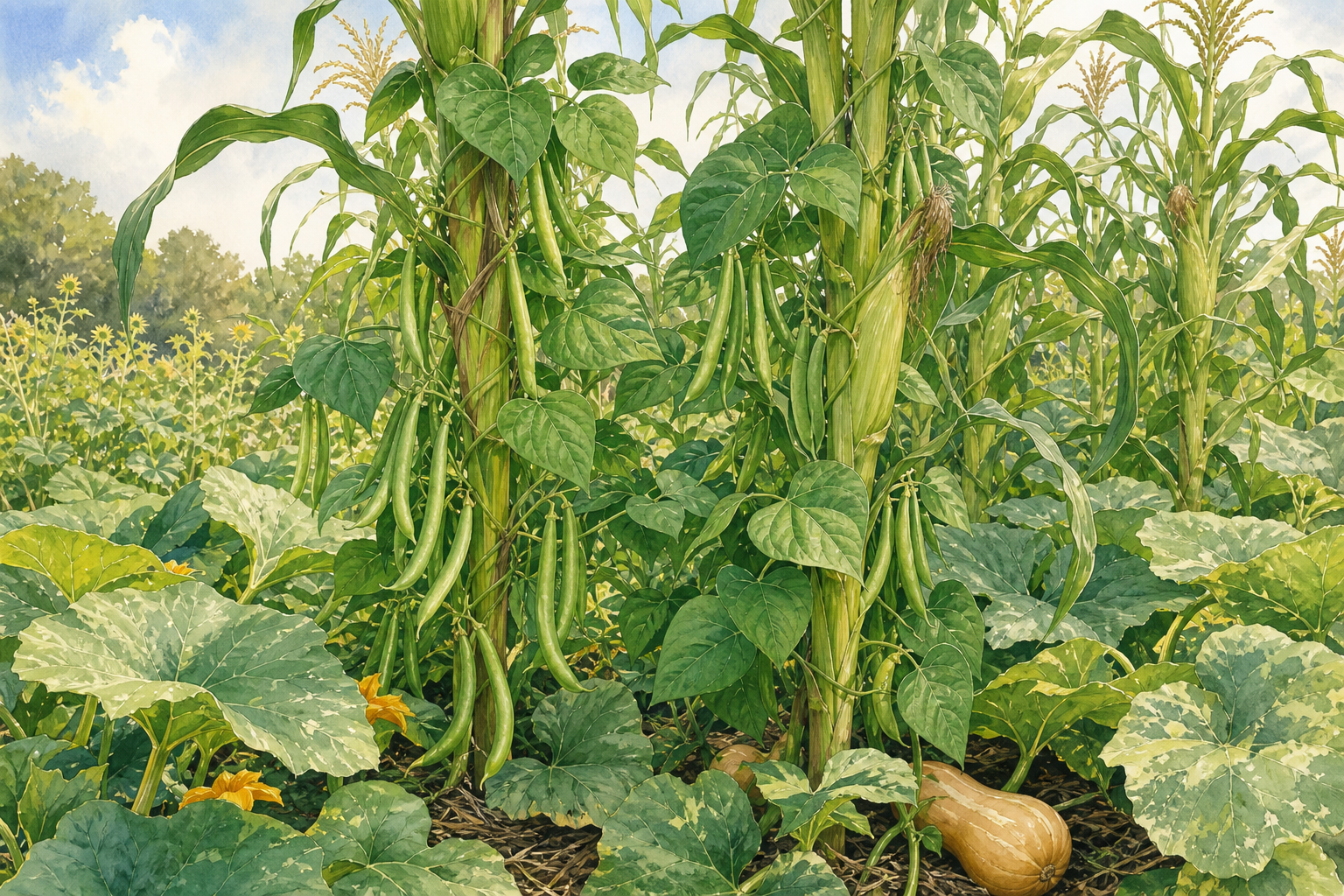
Watercolor field illustration of pole bean vines climbing corn stalks in a Three Sisters garden

Plant guide

Pole Beans

Phaseolus vulgaris

beginner level

Pole beans are the climbing nitrogen-fixing layer of the Three Sisters guild, using corn stalks for support while producing a steady harvest in a compact footprint.

Photo: BuildLeanSaaS / Smart Lawn Guide generated field illustration

Central Virginia notes

  • Three Sisters role: pole beans climb corn and add the legume layer beside winter squash.
  • In Central Virginia humidity, space mounds generously so bean foliage can dry after storms.
  • If deer pressure is high, protect young vines until squash leaves and corn height create a denser planting.

Quick Growing Facts

Sun Requirements
full sun
Water Needs
moderate
Growth Habit
55-75 days
Hardiness Zones
3-10
Mature Size
6-10 foot vines
Soil Type
Warm, fertile, well-draining soil

Soil & Bed Preparation

Pole beans prefer warm, loose soil with moderate fertility. In a Three Sisters mound, the corn gets the richest center while beans are sown around the stalks once roots are active and soil is warm.

Watering & Feeding

Keep soil evenly moist from flowering through pod fill. Deep watering once or twice weekly is better than shallow daily splashing, especially where squash leaves reduce evaporation.

Use compost rather than heavy nitrogen. Beans fix nitrogen with the help of soil microbes, but they still appreciate good mineral balance and steady moisture.

Training & Maintenance

Train vines by laying the first tendrils against corn stalks. If vines bridge between stalks or shade corn leaves, redirect them gently while young.

Harvest & Storage

Pick snap beans when pods are firm and seeds are still small. For dry beans, leave pods on the vine until they rattle, then finish drying under cover before storage.

Planting Instructions

  • Direct sow after frost when soil is warm.
  • In a Three Sisters mound, wait until corn is about 6 inches tall before sowing beans.
  • Plant 4 bean seeds around each corn cluster and thin if vines crowd the stalks.
  • Guide young vines gently toward corn rather than tying them tightly.

Care Instructions

  • Harvest every few days to keep vines productive.
  • Avoid high-nitrogen fertilizer that makes leaves instead of pods.
  • Water at the base during flowering and pod set.
  • Let some pods mature fully if you want dry beans for storage.

Seasonal Growing Calendar

Late spring

  • Wait until corn has a head start before sowing beans.
  • Plant around the corn cluster, not directly on top of the corn seed line.
  • Protect seedlings from slugs and cutworms.

Early summer

  • Guide vines toward sturdy stalks.
  • Thin crowded seedlings if every seed germinates.
  • Water deeply during hot dry spells.

Mid summer

  • Harvest snap beans frequently.
  • Scout leaf undersides for Mexican bean beetles.
  • Keep vines from smothering corn tassels.

Late summer

  • Choose whether to keep picking fresh pods or let selected pods dry.
  • Save dry beans only from healthy plants.
  • Remove diseased vines after harvest rather than composting them hot and wet.

Best companion plants for Pole Beans

Corn

Corn is listed as a useful companion for Pole Beans; use it to build a more resilient mixed planting instead of treating this as a single-crop bed.

Open guide

Winter Squash

Winter Squash is listed as a useful companion for Pole Beans; use it to build a more resilient mixed planting instead of treating this as a single-crop bed.

Open guide

Use these as decision points for a mixed bed: choose companions that solve a real job for this planting, such as support, pollinator draw, soil cover, pest confusion, or harvest timing.

Common Pests & Issues

Mexican bean beetles
Aphids
Slugs on seedlings
Vines overwhelming weak supports

Watch out for these common pests and diseases. Early detection and prevention are key to maintaining healthy plants.

Troubleshooting Guide

IssueHow to fix it
Lots of vines but few podsReduce nitrogen, improve sun exposure, and keep watering steady during flowering.
Beans are pulling corn sidewaysUse fewer bean plants per mound or choose a sturdier corn variety next season.
Seedlings disappear overnightCheck for slugs, cutworms, or rabbits and protect the mound until vines establish.

Recommended Varieties

Kentucky Wonder

Classic productive pole bean for fresh pods and traditional garden trellising.

65 days

Rattlesnake

Heat-tolerant pole bean with purple-streaked pods and strong summer performance.

65-75 days

Hidatsa Shield Figure

Dry bean type often discussed with traditional Three Sisters gardens and storage crops.

Succession Ideas

  • For fresh beans, make a second trellised planting outside the corn guild if you need a longer harvest.
  • Inside the Three Sisters guild, timing matters more than succession: corn must be strong before vines climb.
  • Save seed from dry pods only after they cure completely.

Best uses in the yard

Fresh green beans
Dry shelling beans
Soups
Stews
Casseroles

Habitat value

Plant protein
Fiber
Folate
Pairs well with corn for staple-crop nutrition

Sources and further reading

Plant details were checked against regional/native plant references before publication.

Ready to place Pole Beans in the right spot?

Use it as one layer in a darker, softer, lower-spray yard that supports fireflies and the insects they depend on.