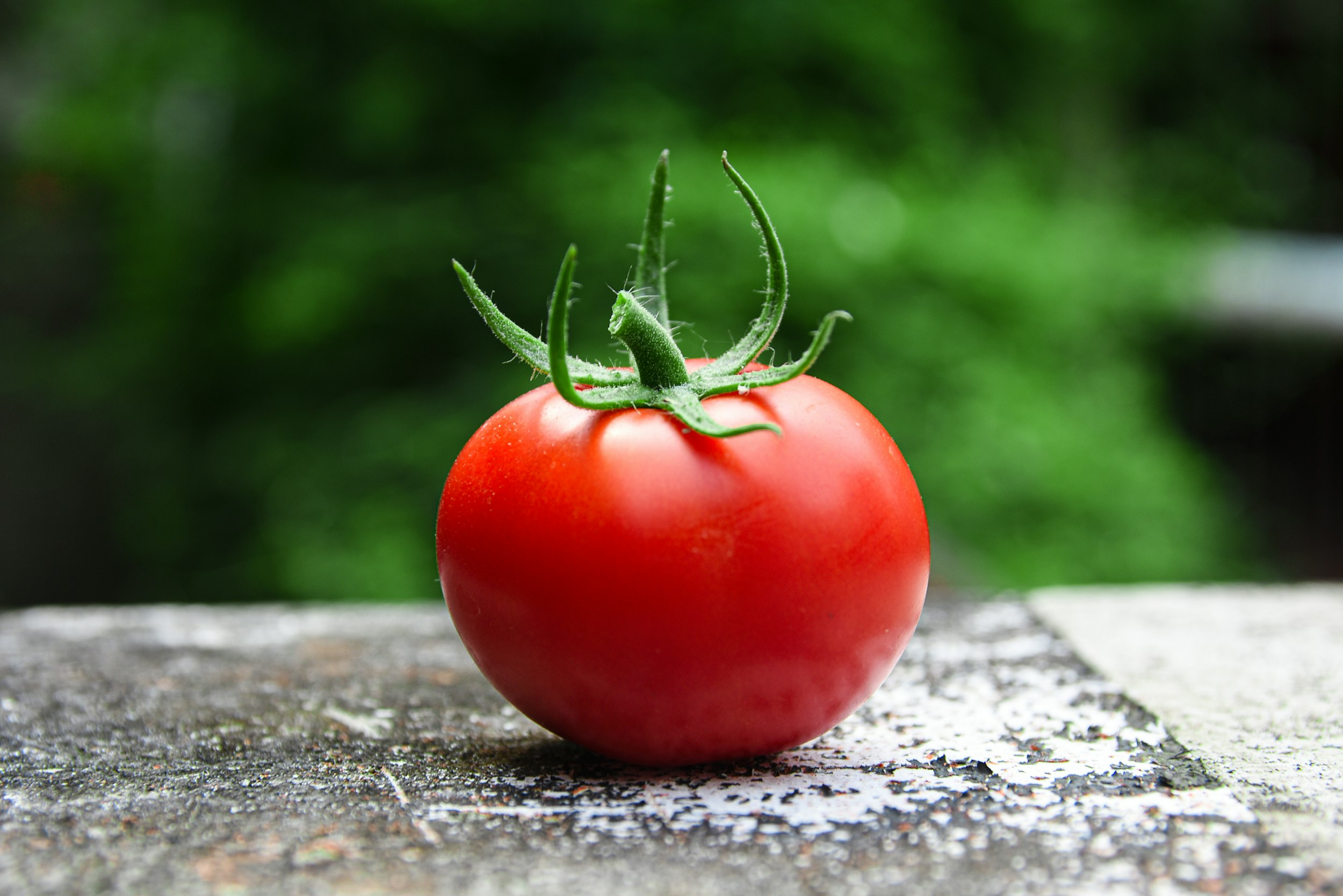
Plant guide
Solanum lycopersicum
The crown jewel of the summer garden, tomatoes are versatile, nutritious, and incredibly rewarding to grow at home.
Photo: Unsplash
Loosen beds to at least 12 inches, blend in 2 to 3 inches of finished compost, and top-dress with a cup of balanced organic fertilizer per plant hole. Tomatoes prefer slightly acidic soil between pH 6.2 and 6.8, so include a handful of crushed eggshell or gypsum if blossom end rot has been an issue in past seasons.
Aim for 1 to 1.5 inches of water per week delivered at the base of the plant. Deep soak twice weekly in early summer, then adjust to every other morning during extreme heat. Consistent moisture prevents cracking fruit and calcium uptake problems.
Feed transplanted tomatoes with a fish and seaweed drench one week after planting, then side-dress with composted poultry manure every three to four weeks. Switch to a potassium-forward fertilizer once the first fruit clusters set to encourage ripening instead of leafy growth.
Install sturdy cages or a trellis immediately after transplanting. Remove the bottom 12 inches of foliage to improve airflow and train indeterminate vines to two leaders by pinching new suckers weekly. Keep tools sanitized to avoid spreading disease.
Pick fruit just as it blushes for the juiciest flavor, allowing it to finish ripening on the counter out of direct sun. Store fully ripe tomatoes at room temperature and refrigerate only when you need to hold them an extra day. Green tomatoes can be wrapped in newsprint and kept in a cool closet to ripen slowly.
Basil is listed as a useful companion for Tomatoes; use it to build a more resilient mixed planting instead of treating this as a single-crop bed.
Carrots is listed as a useful companion for Tomatoes; use it to build a more resilient mixed planting instead of treating this as a single-crop bed.
Marigolds is listed as a useful companion for Tomatoes; use it to build a more resilient mixed planting instead of treating this as a single-crop bed.
Nasturtiums is listed as a useful companion for Tomatoes; use it to build a more resilient mixed planting instead of treating this as a single-crop bed.
Use these as decision points for a mixed bed: choose companions that solve a real job for this planting, such as support, pollinator draw, soil cover, pest confusion, or harvest timing.
Watch out for these common pests and diseases. Early detection and prevention are key to maintaining healthy plants.
Treat Tomatoes as one role in a working plant team. These guild pages show the full recipe, timing, nearby plants, and failure points around this crop.
| Issue | How to fix it |
|---|---|
| Yellowing leaves with dark spots | Remove infected foliage, increase airflow with additional pruning, and spray with a copper or bio-fungicide on an overcast evening. |
| Blossom end rot on the first fruit set | Keep soil moisture consistent, add crushed eggshells or calcium nitrate to the root zone, and avoid high-nitrogen fertilizers. |
| Poor fruit set during heat waves | Provide afternoon shade cloth, mist plants at dusk to cool blossoms, and shake flower clusters in the morning to encourage pollination. |
Dependable slicer that tolerates variable weather and produces firm fruit with balanced acidity.
Prolific orange cherry tomato with a candy-sweet flavor that keeps producing until frost.
Heirloom beefsteak prized for smoky, complex flavor; thrives with sturdy trellising.
Check out our companion planting guides and learn about creating productive plant guilds for your garden.
